ARGUS-X
The system segments populations and operational spaces into dynamic risk profiles, combining behavioral signals, movement patterns, and contextual data to generate continuously updated threat and influence maps. Using advanced analytical models and artificial intelligence, ARGUS-X highlights high-risk individuals, emerging actors, and influential nodes within a network.
By transforming raw data into structured intelligence, ARGUS-X enables predictive assessment, early-warning insights, and informed decision-making across security, defense, and strategic monitoring operations.
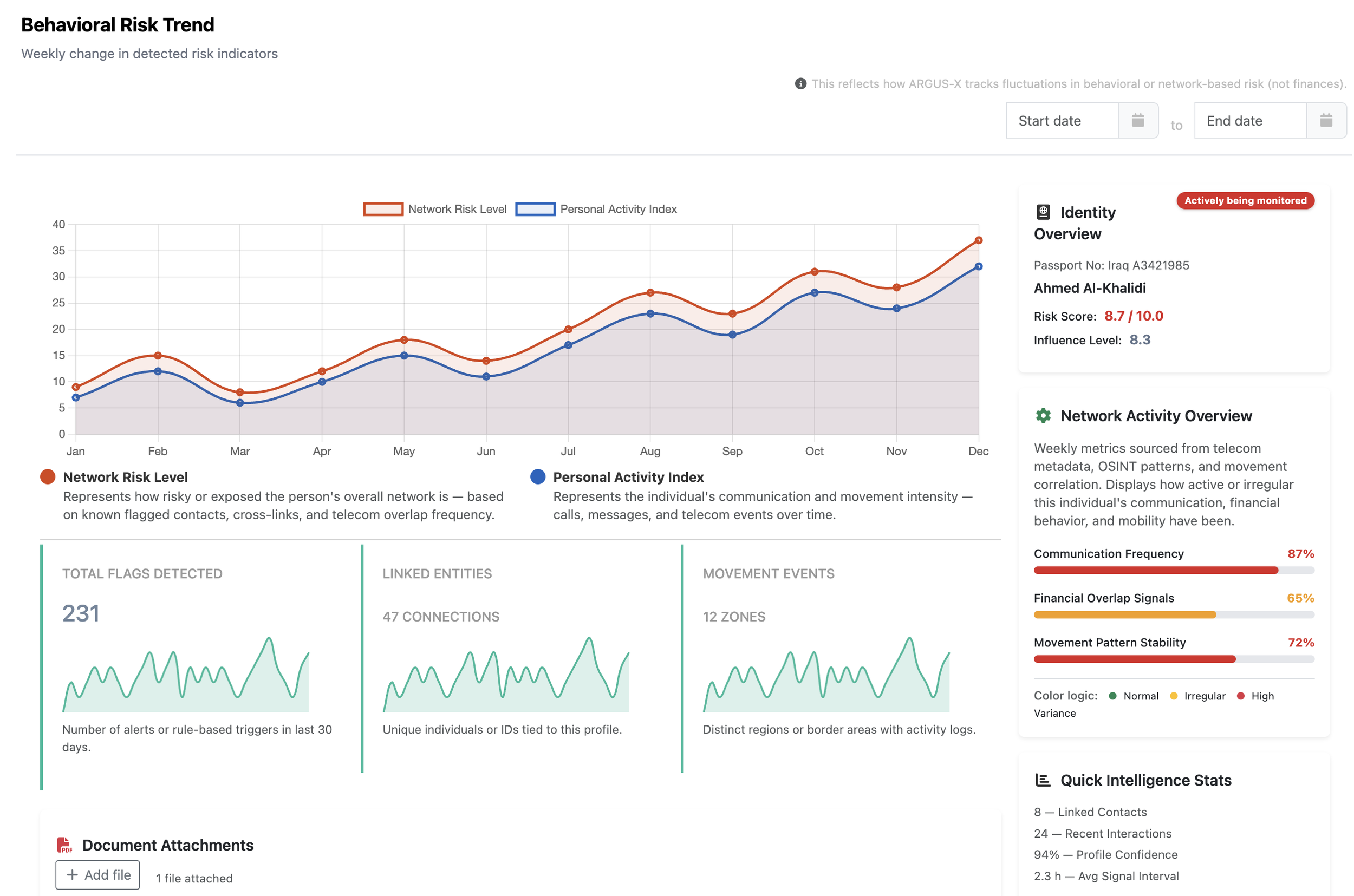
Population Risk & Influence Mapping
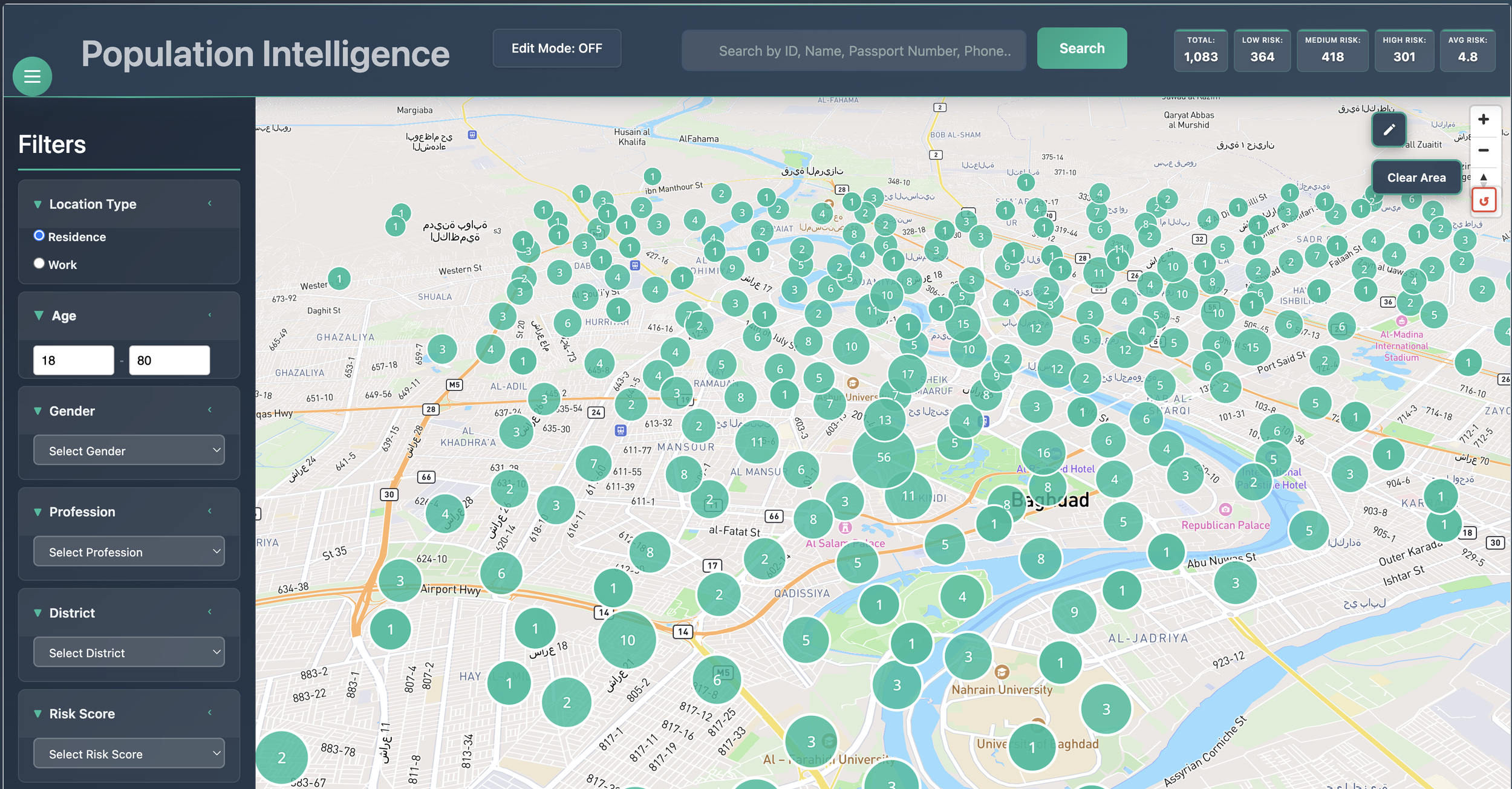
ARGUS-X applies AI-driven segmentation and behavioural analysis to map population risk and influence at scale within complex operational environments.
The platform aggregates and correlates data from authorized sources, including open-source intelligence and institutional datasets provided by national and governmental partners. This information is structured into unified profiles, allowing users to examine individuals and entities in detail including identity attributes, professional background, known associations, contact metadata, and location-based records such as primary and secondary addresses, where permitted.
Each profile is further enriched through structured open-source intelligence, linking relevant digital presence and publicly available online activity. Where available and authorised, ARGUS-X associates individuals with known social media accounts and online platforms, enabling analysts to review publicly observable behavior, networks, affiliations, and patterns of communication within the same operational interface.
ARGUS-X continuously updates profiles and risk scores as new data becomes available, enabling the identification of emerging threats, key actors, and high-risk zones. By combining artificial intelligence with validated national data sources and structured intelligence workflows, ARGUS-X transforms fragmented information into actionable insight, supporting investigation, monitoring, and strategic decision-making for security and intelligence operations.
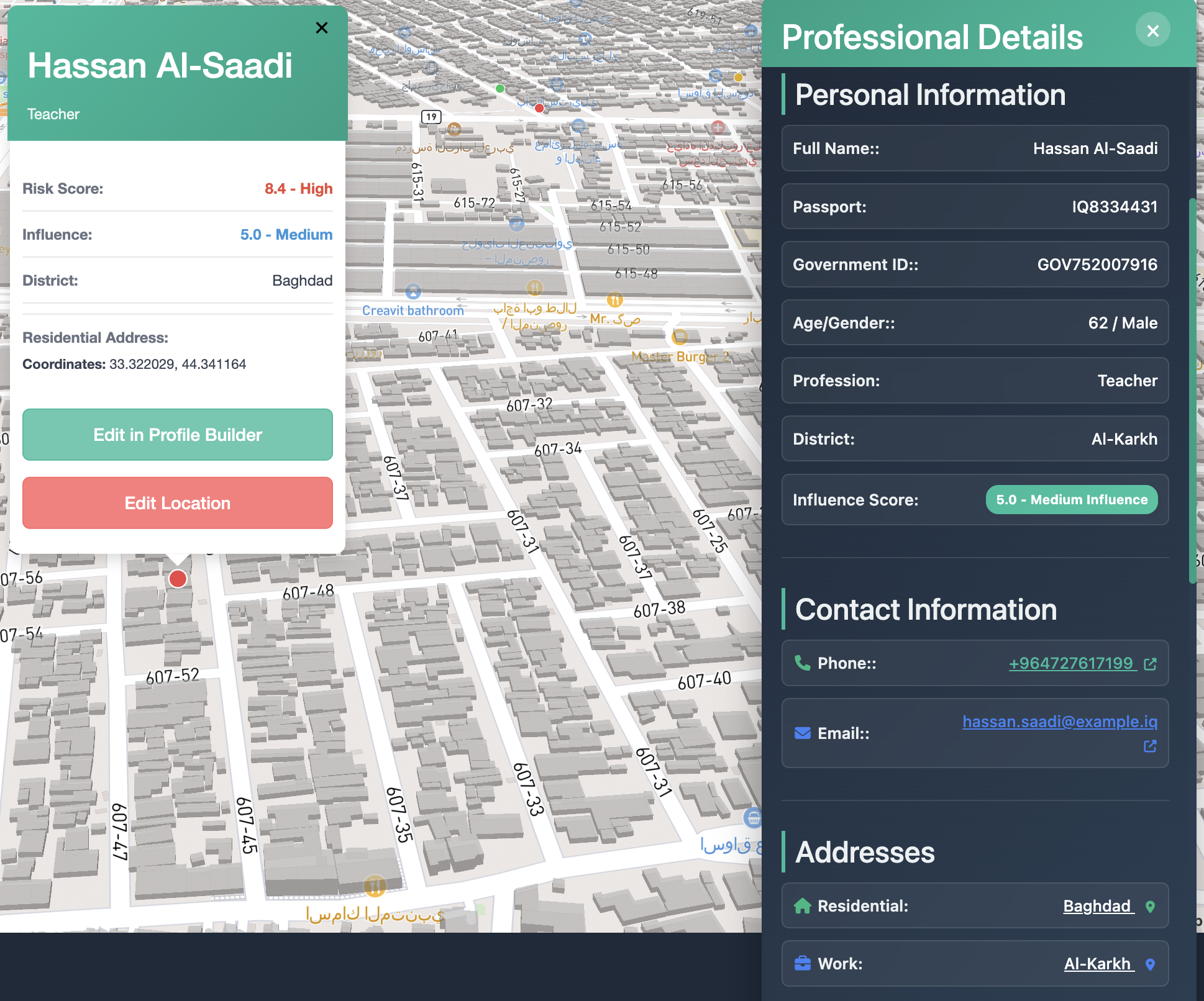
Through an interactive interface, analysts can navigate from high-level population views down to individual profiles, assess risk indicators, review influence and connectivity, and monitor changes over time. Social and relational data is visualised alongside geographic and behavioural context, supporting a deeper understanding of network dynamics and emerging actors.
Network Risk & Influence Analysis
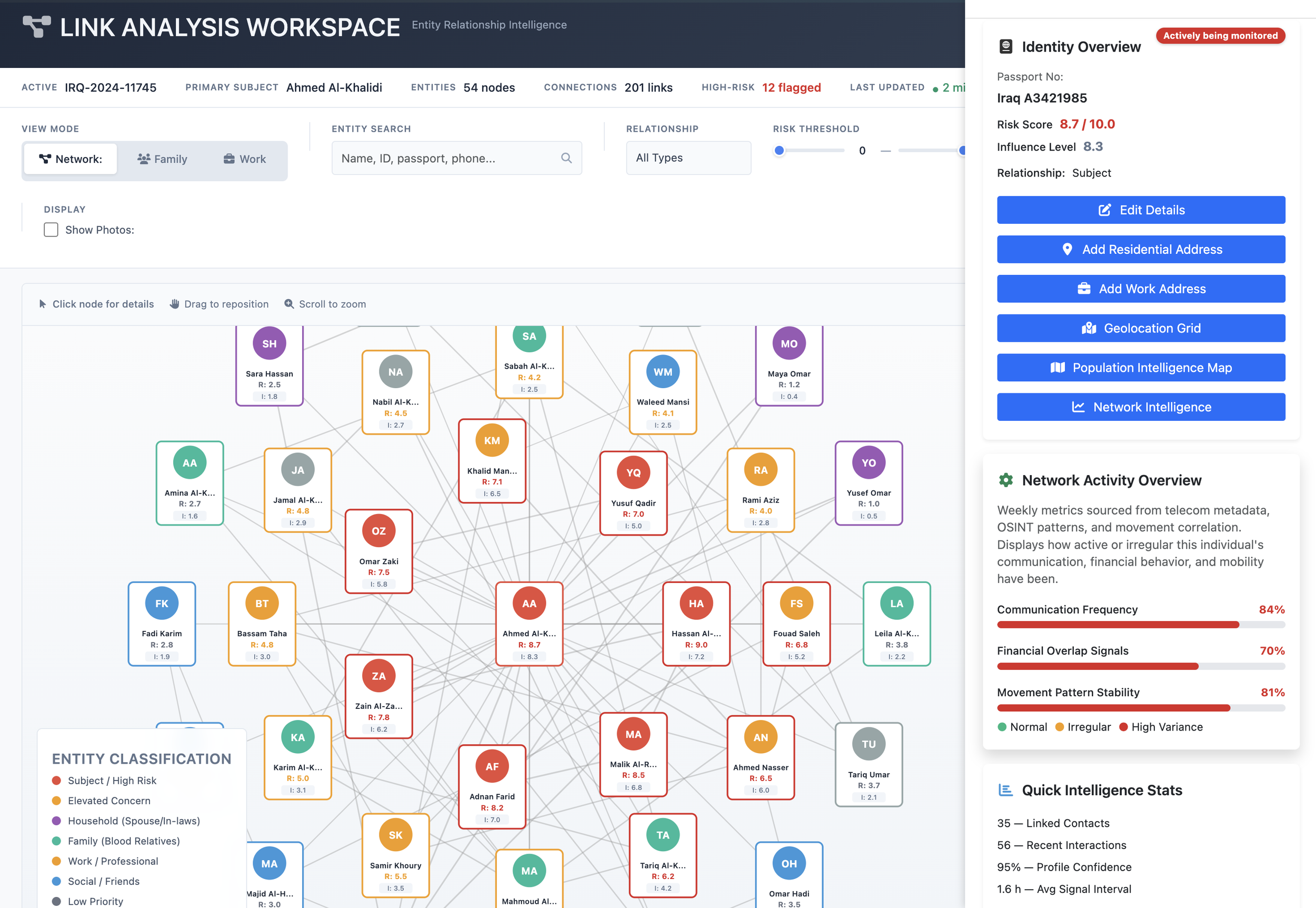
Entities are mapped as interconnected nodes, allowing analysts to explore familial, professional, financial, and social relationships within a single workspace. Networks can be dynamically reorganised into focused views such as family trees, professional or organisational structures, and broader association networks enabling users to isolate specific relationship domains while maintaining visibility of the wider context.
By combining structural network analysis with behavioral and risk indicators, ARGUS-X highlights central actors, facilitators, and potential points of intervention. Analysts can shift seamlessly between individual-centric views and expanded network perspectives to understand how influence, risk, and connectivity propagate across different layers of a network.
Predictive insights identify emerging patterns, influence pathways, and escalation risks, enabling users to move from passive observation to informed action. This capability supports investigative workflows, disruption planning, and strategic decision-making across intelligence and security operations.
AI-Driven Operational Strategy Generation
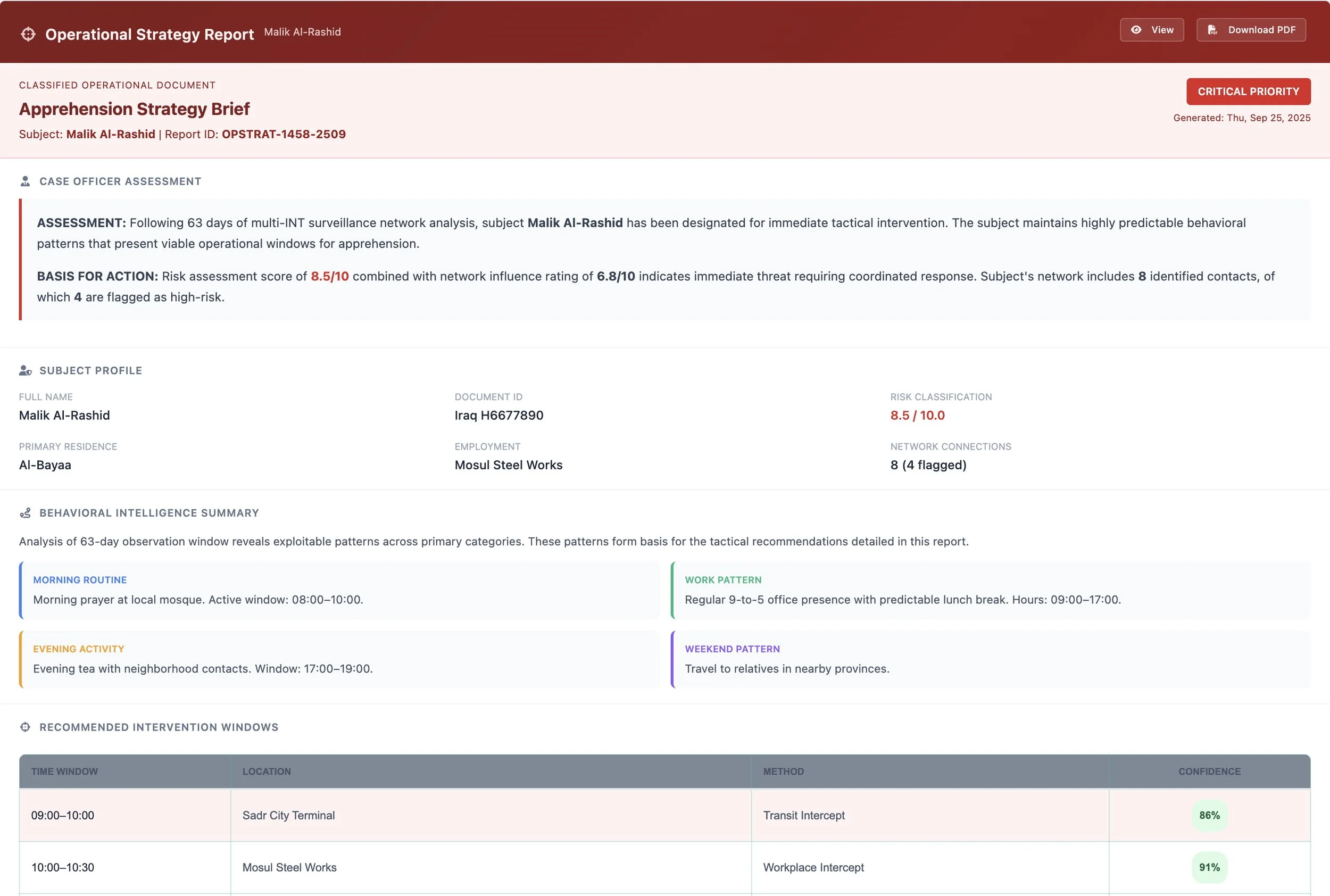
ARGUS-X uses artificial intelligence to synthesize open-source intelligence, authorized institutional data, and behavioral signals to model an individual’s daily routines, movement patterns, and decision cycles. By analyzing temporal behavior, location consistency, network interactions, and contextual factors, the system identifies viable operational windows and evaluates potential intervention strategies.
Each potential action is assessed against multiple variables, including predictability, environmental risk, network proximity, and historical behavior. ARGUS-X assigns confidence scores to locations and time windows, enabling analysts and officers to compare scenarios and prioritize the most effective course of action.
The resulting operational strategy is generated as a structured report, providing officers with AI-assisted recommendations, supporting intelligence, and confidence metrics. This approach transforms fragmented data into actionable insight, supporting informed, timely, and proportionate decision-making in operational environments.
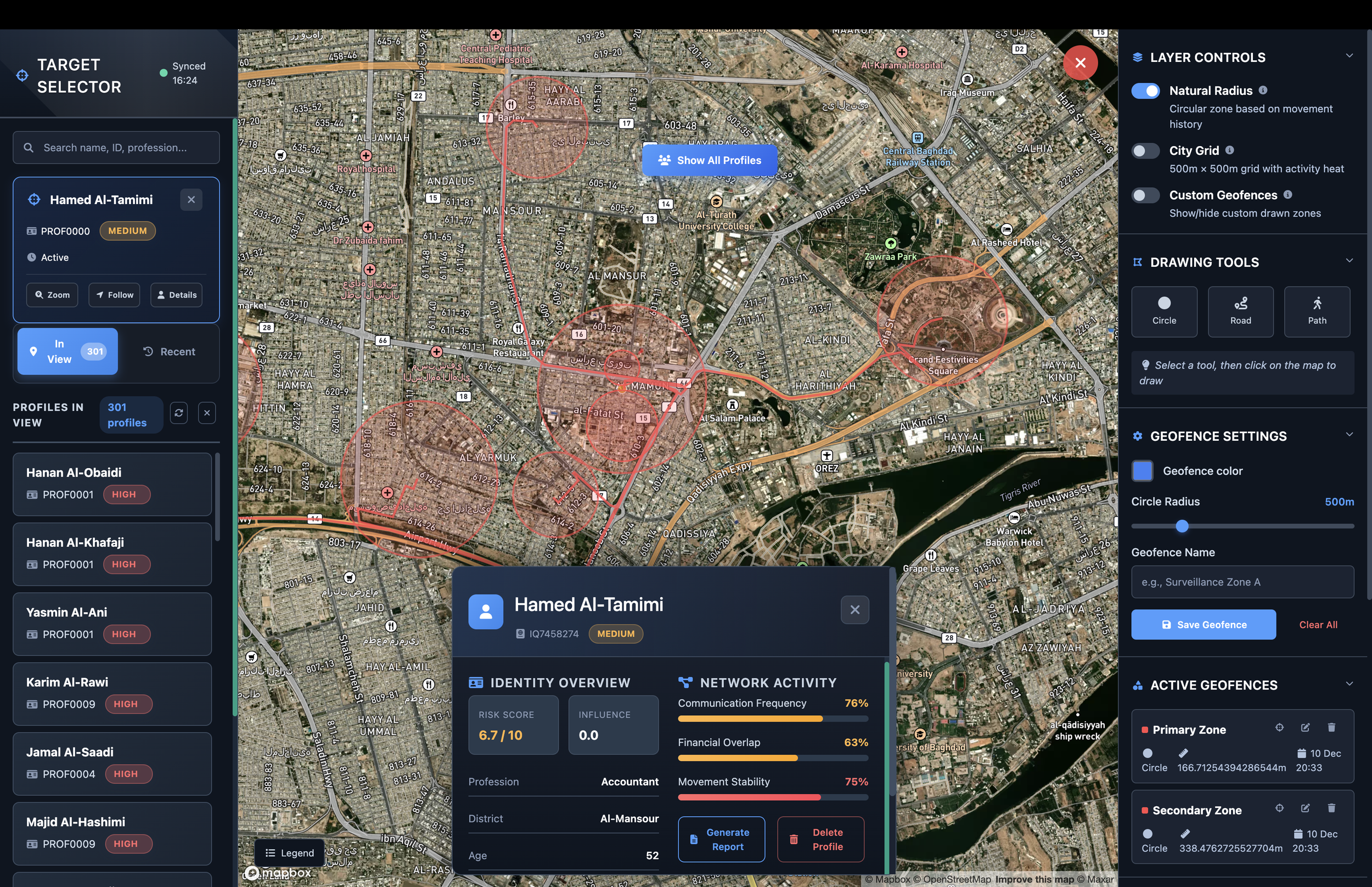
Geospatial Behavior & Zone-Based Intelligen
ARGUS-X applies AI-driven geospatial analysis to identify, model, and monitor location-based behavior over time. By correlating movement history, telecom signals, open-source intelligence, and authorized institutional data, the platform identifies zones an individual enters most frequently and the temporal patterns associated with those locations.
These zones are analyzed not in isolation, but within their surrounding human context. ARGUS-X evaluates co-presence, overlap timing, and behavioral convergence to surface hidden associations — such as repeated proximity to high-risk or high-influence individuals within specific locations. Routine activities, including visits to commercial venues or public spaces, can reveal non-obvious connections when multiple profiles consistently intersect within the same spatial and temporal window.
Analysts can define custom geofences manually or leverage AI-assisted automation to generate zones based on observed movement patterns, risk density, or operational relevance. Zones may be classified as monitored, restricted, or sensitive. When an individual enters a restricted or sensitive zone, the system automatically flags the event, records it within the activity log, and generates alerts for review.
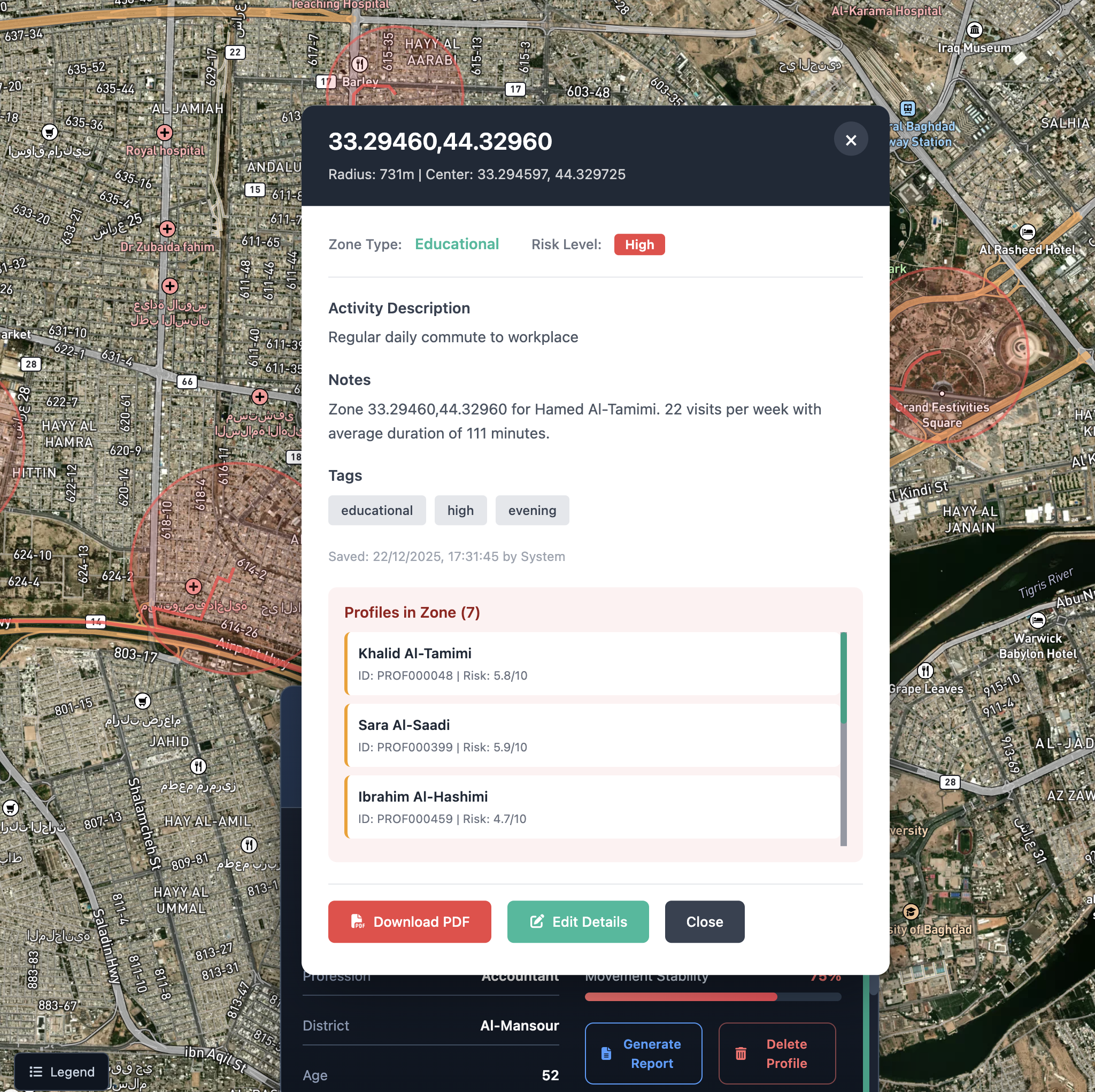
Each zone maintains its own intelligence context, including associated individuals, historical activity, risk indicators, and confidence metrics. Interactive zone cards provide analysts with immediate insight into why a location is significant and how it relates to broader network and behavioral patterns. This enables continuous monitoring, rapid anomaly detection, and proactive response within dynamic operational environments.
ARGUS-X
ARGUS-X is built around a configurable policy and intelligence framework that adapts to the political, legal, and operational definitions of each customer. At the core of the system is a dedicated policy and governance layer that allows customers to define what constitutes high risk, high influence, extremism, priority behavior, or threat relevance within their own jurisdiction. These definitions directly shape how the platform’s AI models interpret data, correlate signals, and generate risk and influence scores. As a result, scoring, prioritization, and alerting are not fixed or universal, but dynamically recalibrated to reflect the customer’s mandate, doctrine, and strategic objectives. The same individual, behavior, or signal may therefore produce different outcomes across deployments, ensuring alignment with local policy rather than imposing an external interpretation of risk.
Within this framework, ARGUS-X provides a comprehensive intelligence and operational environment that supports analysis, investigation, and command-level decision-making. The platform integrates population-level risk assessment, network and relationship analysis, geospatial intelligence, and behavioral modeling to surface patterns, associations, and emerging threats across individuals, zones, and time. Advanced case file management and interactive investigation workspaces allow analysts to combine AI-generated insight with manual reasoning, map relationships, annotate findings, and manage intelligence within structured workflows. Real-time operational views provide visibility into resources, teams, organizational structures, and situational conditions, while city-wide intelligence overviews aggregate signals, incidents, and behavioral trends into a unified operational picture. Together, these capabilities enable ARGUS-X to function as a configurable decision-support system that transforms diverse data sources into actionable intelligence, tailored to the priorities and governance model of each customer.